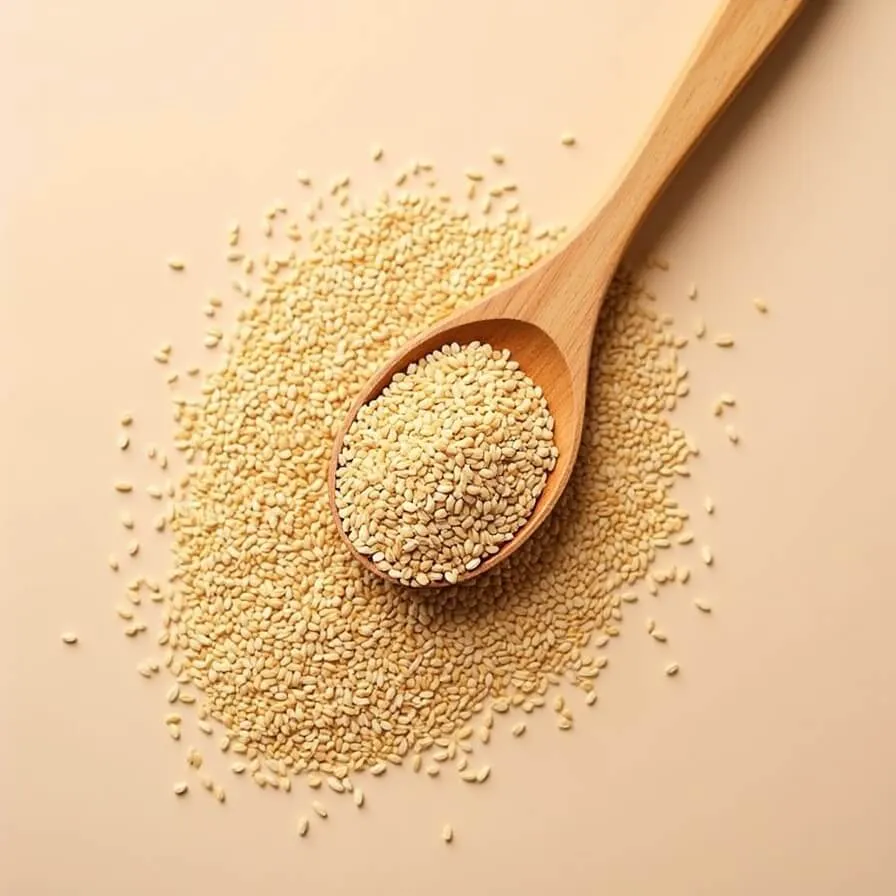
Sesame Seeds Export from India: Varieties, Specifications & Sourcing Guide
India's Sesame Seed Industry
India is one of the world's top producers and exporters of sesame seeds (Sesamum indicum), with over 3,000 years of cultivation history. India produces approximately 800,000 tonnes of sesame seeds annually, ranking among the top three global producers alongside Sudan and Myanmar.
- Scientific Name: Sesamum indicum L.
- Major Growing States: Gujarat, Rajasthan, West Bengal, Madhya Pradesh, Uttar Pradesh, Maharashtra
- Harvest Season: June to September (Kharif crop), January to March (Rabi crop)
- HS Code: 1207.40
- Oil Content: 48 – 55% (premium grade)
- Annual Export Value: Over USD 600 million
- Top Export Markets: China, Vietnam, South Korea, Japan, Turkey, USA, EU
Indian sesame seeds are prized for their exceptional oil content (50–55% in premium Gujarat varieties), nutty flavor profile, and versatile applications across food, cosmetics, and pharmaceutical industries. The unique semi-arid growing conditions of Gujarat and Rajasthan produce sesame with superior quality characteristics compared to African origins.
Sesame Seed Varieties for Export
India exports three primary types of sesame seeds, each serving different market needs:
1. White (Natural) Sesame Seeds
White sesame is the most exported variety from India, accounting for over 70% of total sesame exports. These seeds have a creamy white to off-white color and are valued for their high oil content and mild, nutty flavor.
| Parameter | Specification |
|---|---|
| Color | Creamy white to off-white |
| Oil Content | 48 – 55% |
| Moisture | <5% |
| Purity | 99% – 99.95% |
| FFA (Free Fatty Acid) | <2% |
| Size | 2.5 – 3.2 mm |
| Best For | Oil extraction, tahini, baking, confectionery, cooking |
| Key Markets | China, Vietnam, Korea, Japan, Turkey, EU |
2. Black Sesame Seeds
Black sesame seeds are a premium variety with higher antioxidant levels and a more intense, earthy flavor. They are particularly popular in East Asian cuisine and traditional medicine.
| Parameter | Specification |
|---|---|
| Color | Deep black (jet black preferred) |
| Oil Content | 46 – 52% |
| Moisture | <5% |
| Purity | 99% – 99.95% |
| Size | 2.2 – 3.0 mm |
| Best For | Asian cuisine, health foods, black sesame oil, traditional medicine |
| Key Markets | Japan, South Korea, China, Taiwan, USA |
3. Hulled Sesame Seeds
Hulled sesame seeds are white sesame with the outer husk (hull) removed through a mechanical or chemical hulling process. This produces a smoother, lighter seed with improved taste and texture — ideal for food-grade applications.
| Parameter | Specification |
|---|---|
| Color | Pure white (ivory to snow white) |
| Oil Content | 50 – 57% |
| Moisture | <5% |
| Purity | 99.90% – 99.99% |
| FFA | <1.5% |
| Unhulled Ratio | <0.1% (premium grade) |
| Best For | Tahini, hummus, bakery toppings, burger buns, confectionery, sushi garnish |
| Key Markets | EU, USA, Middle East, Japan, Australia |
4. Brown Sesame Seeds
Brown sesame is primarily used for oil extraction in Indian domestic and export markets. It has a robust, earthy flavor and is less refined than white varieties.
| Parameter | Specification |
|---|---|
| Color | Golden brown to reddish brown |
| Oil Content | 45 – 50% |
| Moisture | <6% |
| Best For | Oil extraction, animal feed, industrial applications |
| Key Markets | China, Vietnam, West Africa |
Source Premium Sesame Seeds from India
Available in white, black, hulled, and roasted varieties. Sample shipments available for quality verification.
Request Sesame Quote WhatsApp UsExport Specifications & Parameters
Key quality parameters tested and certified for every sesame seed export shipment:
| Parameter | Standard Spec | Premium Spec |
|---|---|---|
| Purity | 99.0%+ | 99.95%+ |
| Moisture | <6% | <5% |
| Oil Content | 48%+ | 52%+ |
| FFA (Free Fatty Acid) | <3% | <1.5% |
| Foreign Matter | <1% | <0.1% |
| Admixture (other seeds) | <2% | <0.5% |
| Acid Value | <4 mg KOH/g | <2 mg KOH/g |
| Peroxide Value | <10 meq/kg | <5 meq/kg |
| Aflatoxin (Total) | <20 ppb | <10 ppb (EU compliant) |
| Salmonella | Absent in 25g | Absent in 25g |
| E. coli | <100 CFU/g | <10 CFU/g |
| Pesticide Residues | Within MRL limits | EU MRL compliant |
Growing Regions & Harvest Calendar
Major Growing Regions
- Gujarat (Banaskantha, Sabarkantha, Kutch): India's largest sesame producing state (30%+ of national output). Known for premium white sesame with the highest oil content. Semi-arid climate and sandy loam soils create ideal growing conditions.
- Rajasthan (Pali, Jalore, Nagaur, Jodhpur): Second largest producer. Desert climate produces robust seeds with good oil content. Both white and brown varieties.
- West Bengal (Murshidabad, Birbhum): Primary source of black sesame seeds. Two growing seasons (Kharif and Rabi) enable year-round supply.
- Madhya Pradesh (Tikamgarh, Chhatarpur): Growing production region with increasing organic cultivation.
- Uttar Pradesh & Maharashtra: Smaller production volumes focused on both white and mixed varieties.
Crop Calendar
| Period | Activity | Importer Note |
|---|---|---|
| June – July | Kharif sowing (main crop) | Pre-season contracts available |
| August – September | Growing / flowering | Crop estimates released |
| September – October | Kharif harvest | New crop availability begins |
| October – November | Post-harvest processing | Best time for new crop procurement |
| November – December | Rabi sowing (winter crop) | Second crop cycle in select regions |
| January – March | Rabi harvest | Additional supply from winter crop |
Applications & End Uses
Food Industry
- Tahini / Sesame Paste: Hulled white sesame — primary ingredient for tahini (Middle East), halva, and hummus
- Bakery: Hulled and natural sesame for burger buns, bread toppings, breadsticks, and crackers
- Confectionery: Sesame brittle (chikki/halwa), energy bars, snack mixes, and candy coatings
- Cooking Oil: Cold-pressed and refined sesame oil — premium cooking oil in Asian cuisines
- Asian Cuisine: Black and white sesame for sushi, stir-fry, ramen, and rice dishes
Industrial & Non-Food
- Cosmetics: Sesame oil in skincare, massage oils, and hair care products (rich in vitamin E and sesamol)
- Pharmaceutical: Carrier oil for Ayurvedic and traditional medicines, supplements
- Animal Feed: Sesame meal (de-oiled cake) as high-protein animal feed ingredient
HS Code & Container Capacity
HS Code Classification
| Product | HS Code | Description |
|---|---|---|
| Sesame Seeds (seed quality) | 1207.4010 | Sesame seeds, of seed quality (for sowing) |
| Sesame Seeds (other) | 1207.4090 | Other sesame seeds (for oil extraction, food use, etc.) |
| Sesame Oil (crude) | 1515.5010 | Sesame oil, crude |
| Sesame Oil (refined) | 1515.5090 | Other sesame oil (refined) |
Container Capacity
| Container Type | Capacity | Packaging Options |
|---|---|---|
| 20 ft Standard | 18 – 20 MT | 25/50 kg PP bags, jumbo bags, or custom packing |
| 40 ft Standard | 25 – 27 MT | 25/50 kg PP bags, jumbo bags, or custom packing |
Packaging Options
- PP Bags: 25 / 50 kg — standard for bulk trade, double-stitched
- Paper-Kraft Bags: 25 kg — food-grade, preferred for EU/US markets
- Jumbo Bags (FIBC): 500 kg / 1 MT — for industrial processors and oil mills
- Vacuum Packs: 1 – 25 kg — for freshness preservation and retail distribution
- Custom Retail Packs: 100g – 5 kg — private label packaging available
Quality Assurance & Testing
Every batch of sesame seeds exported by Mile Overseas undergoes comprehensive quality assurance:
- Oil Content Analysis: Lab-verified oil content to ensure buyer specifications are met — critical for oil extraction buyers
- Salmonella Testing: Mandatory batch-level testing per EU Regulation 2073/2005 — particularly important given recent RASFF alerts on sesame
- Aflatoxin Screening: HPLC-based testing for B1, B2, G1, G2 aflatoxins with limits per destination market
- Sortex Cleaning: Multi-stage color sorting to remove discolored, immature, and damaged seeds
- Metal Detection: Inline metal detection (ferrous, non-ferrous, and stainless steel) for food safety
- Traceability: Complete lot traceability from farm origin to port of shipment
Nutritional & Health Benefits
Indian sesame seeds are a nutritional powerhouse, making them increasingly popular in health-conscious markets:
- High in Healthy Fats: 48–55% oil content with excellent omega-6 to omega-3 ratio
- Rich in Protein: 17–25% protein content — valuable plant protein source
- Calcium Rich: Unhulled sesame provides up to 975mg calcium per 100g — more than milk
- Antioxidants: Contains sesamin and sesamolin — unique lignans with antioxidant properties
- Iron & Zinc: Excellent source of iron (14.6mg/100g) and zinc (7.8mg/100g)
- Vitamin E: Natural source of tocopherols for skin health and immune function
These health credentials drive growing demand for sesame seeds in health food, superfood, and clean-label product categories worldwide.
Ready to Source Indian Sesame Seeds?
Get competitive pricing for white, black, and hulled sesame seeds. We ship to 20+ countries worldwide.
Request Free Quote WhatsApp UsFrequently Asked Questions
What types of sesame seeds does India export?
India exports White (Natural) Sesame Seeds (48–55% oil, most exported), Black Sesame Seeds (premium, high antioxidants, popular in East Asia), Hulled Sesame Seeds (husk removed, 99.95% purity, for tahini/bakery), and Brown Sesame Seeds (for oil extraction).
What is the HS code for sesame seeds?
The HS code is 1207.40. Specifically, 1207.4010 for seed quality and 1207.4090 for other sesame (food/oil use). Sesame oil is classified under 1515.50.
Which Indian states produce the best sesame?
Gujarat (Banaskantha, Sabarkantha, Kutch) is the largest producer with the highest oil content white sesame. Rajasthan is the second largest producer. West Bengal is the primary source for black sesame seeds.
What is the oil content of Indian sesame seeds?
Indian sesame typically contains 48–55% oil, with premium Gujarat white sesame reaching 50–55%. This is among the highest globally, making Indian sesame excellent for oil extraction. Higher oil content = better quality = premium pricing.