Red Chilli Varieties from India for Export: S4, S17, Teja, Byadgi & Guntur
India's Red Chilli Export Dominance
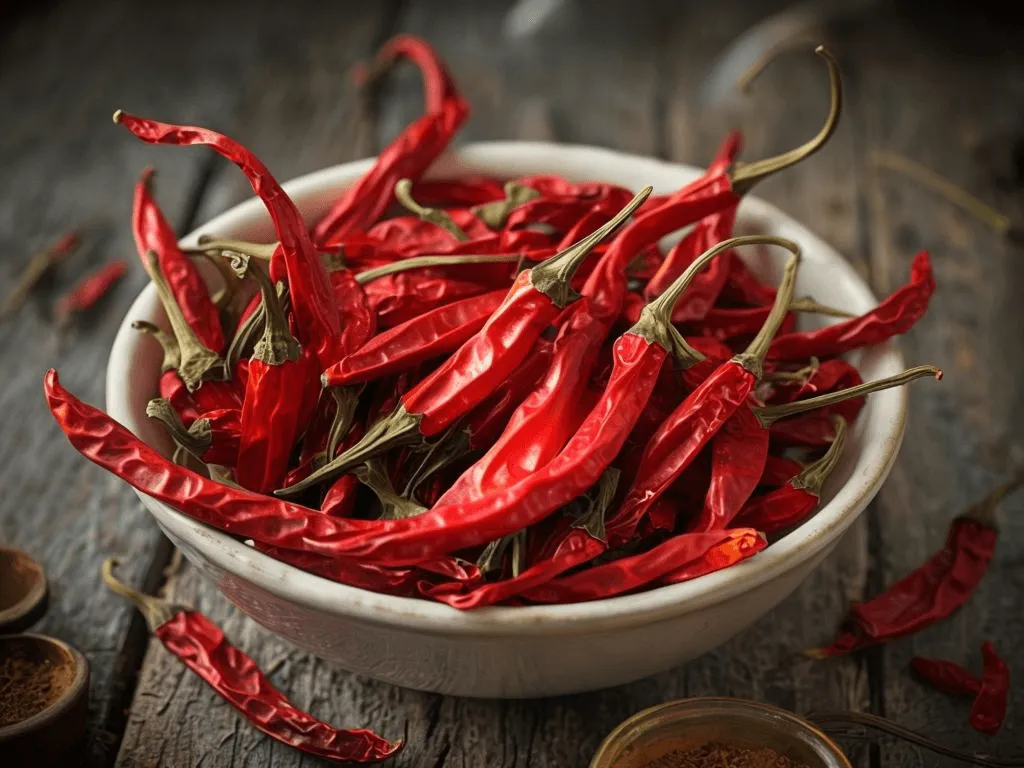
India is the world's largest producer, consumer, and exporter of dry red chillies. The country produces approximately 1.8 million tonnes annually, accounting for nearly 36% of global chilli production. India exports over 500,000 tonnes of chilli and chilli products annually, making it the single most important origin for international chilli buyers.
- Scientific Name: Capsicum annuum L.
- Major Growing States: Andhra Pradesh, Telangana, Karnataka, Madhya Pradesh, Maharashtra
- Harvest Season: March to June (summer crop)
- HS Code: 0904.21 (whole), 0904.22 (ground)
- SHU Range: 8,000 – 100,000+ (varies by variety)
- Annual Export Value: Over USD 1.2 billion
- Top Export Markets: China, Bangladesh, Thailand, Sri Lanka, UAE, USA, Malaysia
Indian red chillies are valued globally for their exceptional color intensity, consistent heat levels, and versatile applications — from whole dried chillies for cooking to oleoresin extraction for food processing. The unique agro-climatic conditions of South India, particularly the Guntur region of Andhra Pradesh, produce chillies with an unmatched combination of color, pungency, and flavor.
Major Red Chilli Export Varieties
India cultivates over 50 chilli varieties, but five dominate the export market. Each variety has distinct characteristics suited to different applications:
1. S4 (Sannam / Wonder Hot)
S4 Sannam is the most widely exported Indian chilli variety, accounting for roughly 40% of India's total chilli exports. It offers an excellent balance of heat, color, and value, making it the default choice for bulk trade.
| Parameter | Specification |
|---|---|
| Other Names | Sannam S4, S334, Wonder Hot |
| Scoville Heat Units (SHU) | 30,000 – 50,000 |
| ASTA Color Value | 60 – 90 |
| Length | 5 – 9 cm |
| Moisture | <12% |
| Origin | Guntur, Andhra Pradesh |
| Best For | Spice blends, cooking, chilli powder, general-purpose use |
| Key Markets | Middle East, Southeast Asia, Africa, China |
2. S17 (Teja Super 10)
S17 Teja Super 10 is a high-pungency variety prized for oleoresin extraction and hot sauce manufacturing. It commands premium pricing due to its exceptionally high SHU rating and is India's second most exported chilli variety.
| Parameter | Specification |
|---|---|
| Other Names | Teja Super 10, Super 10, S17 Teja |
| Scoville Heat Units (SHU) | 50,000 – 75,000 |
| ASTA Color Value | 40 – 60 |
| Length | 6 – 9 cm |
| Moisture | <12% |
| Origin | Khammam (Telangana), Guntur (Andhra Pradesh) |
| Best For | Oleoresin extraction, hot sauces, high-heat applications |
| Key Markets | China, USA, Mexico, Spain, Korea |
3. Teja (S10)
Teja S10 is a versatile variety that bridges the gap between moderate-heat S4 and high-heat S17. It offers good pungency with better color retention than S17, making it popular across diverse applications.
| Parameter | Specification |
|---|---|
| Other Names | Teja S10, No. 5, Indian Teja |
| Scoville Heat Units (SHU) | 50,000 – 75,000 |
| ASTA Color Value | 50 – 80 |
| Length | 5 – 8 cm |
| Moisture | <12% |
| Origin | Warangal, Khammam (Telangana) |
| Best For | Chilli powder, spice blends, oleoresin, dual-purpose use |
| Key Markets | Bangladesh, Sri Lanka, Southeast Asia, Middle East |
4. Byadgi
Byadgi chilli is prized for its extraordinary deep red color with minimal pungency. It is the preferred variety for natural food coloring, paprika production, and applications where vibrant appearance matters more than heat. Byadgi commands premium prices due to its exceptional ASTA color values.
| Parameter | Specification |
|---|---|
| Other Names | Byadagi, Kaddi, Dabbi |
| Scoville Heat Units (SHU) | 8,000 – 15,000 (mild) |
| ASTA Color Value | 120 – 200 (very high) |
| Length | 10 – 15 cm |
| Moisture | <12% |
| Origin | Haveri, Dharwad (Karnataka) |
| Best For | Natural food coloring, paprika, curry pastes, cosmetics |
| Key Markets | USA, Europe, Japan, Korea, Australia |
5. Guntur Sannam
Guntur Sannam from the famed Guntur district of Andhra Pradesh is renowned for its bold flavor and strong heat. The Guntur chilli market (Asia's largest) processes hundreds of thousands of tonnes annually, ensuring consistent supply and competitive pricing.
| Parameter | Specification |
|---|---|
| Other Names | Guntur Chilli, Guntur Red, 334 |
| Scoville Heat Units (SHU) | 40,000 – 60,000 |
| ASTA Color Value | 70 – 100 |
| Length | 5 – 8 cm |
| Moisture | <12% |
| Origin | Guntur, Prakasam (Andhra Pradesh) |
| Best For | Curry powders, cooking pastes, masala blends, bulk trade |
| Key Markets | Middle East, Africa, South Asia, Southeast Asia |
Quick Comparison: All Varieties at a Glance
Use this comparison to identify the right variety for your specific application:
| Variety | SHU (Heat) | ASTA (Color) | Length | Best Application |
|---|---|---|---|---|
| S4 Sannam | 30,000 – 50,000 | 60 – 90 | 5 – 9 cm | General-purpose, spice blends |
| S17 Teja Super 10 | 50,000 – 75,000 | 40 – 60 | 6 – 9 cm | Oleoresin, hot sauces |
| Teja S10 | 50,000 – 75,000 | 50 – 80 | 5 – 8 cm | Dual-purpose (heat + color) |
| Byadgi | 8,000 – 15,000 | 120 – 200 | 10 – 15 cm | Color, paprika, food coloring |
| Guntur Sannam | 40,000 – 60,000 | 70 – 100 | 5 – 8 cm | Curry powders, masala blends |
Source Premium Red Chillies from India
Available in all major varieties: S4, S17, Teja, Byadgi, and Guntur. Sample shipments available for quality verification.
Request Chilli Quote WhatsApp UsExport Specifications & Parameters
Key quality parameters tested and certified for every red chilli export shipment from Mile Overseas:
| Parameter | Standard Spec | Premium Spec |
|---|---|---|
| Moisture Content | <14% | <10% |
| SHU (Pungency) | As per variety | Lab-verified SHU range |
| ASTA Color Value | As per variety | Lab-verified ASTA rating |
| Foreign Matter | <2% | <0.5% |
| Aflatoxin (Total) | <20 ppb | <10 ppb (EU compliant) |
| Aflatoxin B1 | <10 ppb | <5 ppb (EU compliant) |
| Pesticide Residues | Within MRL limits | EU MRL compliant (EC 396/2005) |
| Sudan Dye | Absent | Absent (certified) |
| Salmonella | Absent in 25g | Absent in 25g |
| E. coli | <100 CFU/g | <10 CFU/g |
| Lead (Pb) | <2 ppm | <1 ppm |
| Ash Content | <8% | <6% |
Growing Regions & Harvest Calendar
Understanding India's chilli belt helps importers time procurement and select the best origin for their requirements:
Major Growing Regions
- Guntur (Andhra Pradesh): India's chilli capital. Home to Asia's largest chilli market (Guntur Mirchi Yard). Produces S4, Guntur Sannam, and 334 varieties. Accounts for over 30% of India's total production.
- Khammam & Warangal (Telangana): Primary production hub for S17 and Teja varieties. Known for high-pungency chillies ideal for oleoresin extraction.
- Haveri & Dharwad (Karnataka): Exclusive origin of Byadgi chillies. The unique black soil and rainfall patterns produce the characteristic deep red color.
- Madhya Pradesh (Khargone, Barwani): Emerging production zone for S4 and teja varieties with increasing organic cultivation.
- Maharashtra (Nashik, Nanded): Produces Kashmiri-type and Sankeshwari varieties for domestic and export markets.
Crop Calendar
| Period | Activity | Importer Note |
|---|---|---|
| July – September | Sowing / transplanting | Pre-season contracts available |
| October – December | Growing / flowering | Crop estimates released |
| January – February | Fruit maturation / color development | Quality projections available |
| March – May | Harvest / sun-drying | New crop arrival — best procurement window |
| June onward | Market arrivals / cold storage | Prices stabilize, stock-based supply |
Available Forms & Processing
Indian red chillies are exported in multiple forms to suit different buyer requirements:
Whole Dried Chillies
- With Stem: Complete dried chillies with stem intact — traditional format for retail and cooking use
- Stemless (De-stemmed): Stems removed for cleaner processing — preferred by spice grinders and food manufacturers
- Wrinkled / Smooth: Texture varies by variety (Byadgi is characteristically wrinkled, S4 is smoother)
Crushed / Flakes
- Chilli Flakes: Coarsely crushed chillies with seeds — popular for pizza seasoning, pasta, and food service
- Coarse Crush: Irregular pieces 3-8mm — used in spice blends and Indian pickles (achar)
Chilli Powder
- Standard Grind: Fine powder (40-60 mesh) for cooking and masala blends
- Ultra-Fine: Extra-fine powder (80-100 mesh) for food processing and seasoning applications
- Kashmiri-Style: Byadgi-based powder for color with mild heat — popular for tandoori and curry applications
Oleoresin
- Capsaicin Extract: Extracted from S17/Teja varieties — concentrated heat for food manufacturing, sauces, and pharmaceutical applications
- Paprika Oleoresin: Color extract from Byadgi — natural food coloring alternative to synthetic dyes
HS Code & Container Capacity
HS Code Classification
| Product | HS Code | Description |
|---|---|---|
| Dry Red Chilli (whole) | 0904.21 | Fruits of genus Capsicum, dried, neither crushed nor ground |
| Chilli Powder / Flakes | 0904.22 | Fruits of genus Capsicum, dried, crushed or ground |
| Chilli Oleoresin | 1302.19 | Vegetable saps and extracts |
Container Capacity
| Container Type | Whole Chillies | Chilli Powder |
|---|---|---|
| 20 ft Standard | 6.5 – 7 MT | 10 – 12 MT |
| 40 ft Standard | 13 – 14 MT | 22 – 24 MT |
Packaging Options
- PP (Polypropylene) Bags: 10 / 25 / 50 kg — standard for bulk trade
- Jute Bags: 25 / 50 kg — traditional, breathable, eco-friendly option
- HDPE Bags with Liner: 25 / 50 kg — moisture barrier for powder/flakes
- Vacuum Packs: 1 – 25 kg — for premium/retail grade shipments
- Custom Retail Packs: 100g – 5 kg — private label / brand packaging available
Quality Assurance & Testing
Every batch of red chillies exported by Mile Overseas undergoes rigorous quality assurance:
- Lab Testing: Comprehensive analysis in accredited laboratories covering SHU (pungency), ASTA color value, aflatoxin, Sudan dye, pesticide residues, heavy metals, and microbiological parameters
- Sudan Dye Screening: Mandatory testing for Sudan I, II, III, and IV dyes — critical for EU, US, and Japanese market access
- Aflatoxin Monitoring: Multi-point sampling with HPLC testing to ensure compliance with destination market limits
- Food-Grade Packaging: Only certified packaging materials, with moisture barriers to prevent degradation during transit
- Traceability: Farm-to-port traceability with documented lot numbers, harvest dates, and processing records
- Fumigation: Methyl bromide or phosphine fumigation as per destination country requirements, with fumigation certificate provided
How to Choose the Right Variety
Selecting the correct chilli variety depends on your end-use application, target market, and pricing requirements:
For Heat / Pungency
If your primary requirement is high pungency (hot sauces, oleoresin extraction, snack seasonings), choose S17 Teja Super 10 or Teja S10. These varieties deliver 50,000–75,000 SHU and maximize capsaicin content per kilogram.
For Color / Appearance
If vibrant red color is critical (food coloring, paprika, curry pastes, tandoori marinades), choose Byadgi. With ASTA values of 120–200, Byadgi provides unmatched natural color intensity with very mild heat.
For General-Purpose / Bulk Trade
For the best value in bulk orders with balanced heat and color, choose S4 Sannam or Guntur Sannam. These offer reliable quality at competitive prices and are the workhorse varieties for international spice trade.
For Dual-Purpose (Heat + Color)
When you need both good pungency and decent color value, Teja S10 is the optimal choice. It provides high heat (50,000-75,000 SHU) with better ASTA values (50-80) than the S17 variant.
Ready to Source Indian Red Chillies?
Get competitive pricing for S4, S17, Teja, Byadgi, or Guntur varieties. We ship to 20+ countries worldwide.
Request Free Quote WhatsApp UsFrequently Asked Questions
What are the main red chilli varieties exported from India?
India exports several key varieties: S4 Sannam (30,000–50,000 SHU) — the most widely exported; S17 Teja Super 10 (50,000–75,000 SHU) — for high-heat applications; Teja S10 (50,000–75,000 SHU) — versatile dual-purpose; Byadgi (ASTA 120–200) — for color with mild heat; and Guntur Sannam (40,000–60,000 SHU) — for curry powders and cooking.
What is the HS code for dry red chilli?
The HS code is 0904.21 for whole dry red chillies (dried, neither crushed nor ground) and 0904.22 for chilli powder/flakes (dried, crushed or ground). These codes fall under Chapter 09 of the Harmonized System.
Which Indian chilli has the highest color value?
Byadgi chilli from Karnataka has the highest natural ASTA color value (120–200) among Indian varieties. It is extensively used for natural food coloring, paprika production, and applications where vibrant red color is needed without excessive heat.
How much dry red chilli fits in a container?
A 20 ft container holds approximately 6.5–7 MT of whole dry chillies and 10–12 MT of chilli powder. A 40 ft container holds 13–14 MT whole or 22–24 MT powder. Capacity varies with packaging type and chilli form.